
how bad isTHE NUTRITION CRISIS IN TIGRAY?
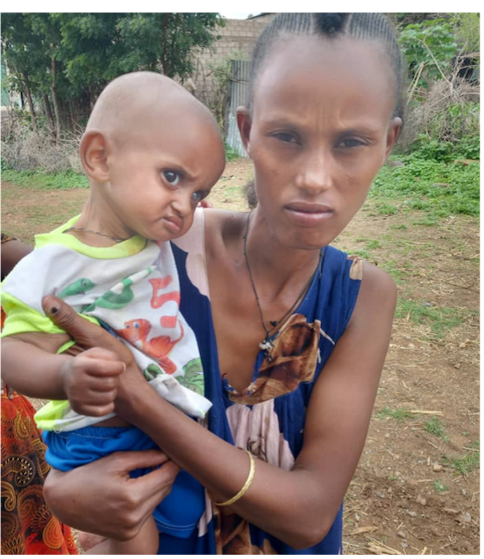
In 2024, Tigray Health Research Institute (THRI) carried out a rapid nutritional assessment in accessible rural areas of Tigray, in partnership with the Tigray Regional Health Bureau (TRHB).>
Note: Due to the war, it was not possible to obtain accurate information on nutrition in rural areas until 2024. Western Tigray was not part of the study due to continuing political and ethnic violence that still makes this area unsafe.
Key Findings:
- 17.9% prevalence of global acute malnutrition in Tigray (for context: “Critical” threshold is > 15%, as determined by the World Health Organization)
- 26.7% prevalence of global acute malnutrition among children 5 years or younger
- An average of 40% of children in Tigray have stunted growth (for context: “Critical” threshold is > 30%, as determined by the World Health Organization)
- Roughly 33% of children surveyed in Tigray were underweight, (for context: “Critical” threshold is >> 30%, as determined by the World Health Organization)
- Women are particularly threatened by the nutrition situation in Tigray
- 53-61% of non-pregnant, non-lactating women were malnourished
- 51-70% of pregnant and lactating women were malnourished
This is the very definition of a public health emergency!
But don’t despair, while it will take billions of dollars and a decade or more to rebuild the entire Tigray Region after the war, small donations to the Fewsi Therapeutic Food Project can make a significant impact by feeding the hungry and rescuing the children who are starving one child at a time! It takes roughly 10 kg of Fewsi Food to cure a child of severe acute malnutrition and the cost of Fewsi Food is roughly $4 per kilogram. Your donation of just $40 can save a child’s life. Donate today!